Petto, Tomasso (1879-1905)

Born Province of Palermo, Sicily, c1879.
Killed Browntown, Pittston, PA, Oct. 21, 1905.

Tomasso Petto, also known as Luciano Perrino (also written about as Luciano Parrino and Tom Carrillo), was a brutal enforcer for the early Morello Mafia in New York City. He participated in counterfeiting operations and "Black Hand" extortion schemes. After establishing himself as a Black Hand leader in northeastern Pennsylvania in 1905, he was murdered in an apparent gangland "hit."

Petto acquired the nickname "Il Bove," meaning "The Ox," because of his physique. He stood about five-feet-eight-inches tall and weighed approximately 220 pounds, nearly all of it muscle. His shoulders, arms, legs and neck were massive. Once, when he was being placed under arrest, he put his arms around the body of a detective - said to be the most powerfully built man on the New York police force - and nearly squeezed the life out of the man.

Petto became the prime suspect in the Barrel Murder case of April 1903, when police found him in possession of a pawn ticket for a watch owned by the victim, Benedetto Madonia. The murder was closely linked with the counterfeiting operations of Mafia boss of bosses Giuseppe Morello - a disciplinary action against Madonia's imprisoned brother-in-law Giuseppe DiPrimo, who was believed (wrongly) to have cooperated with the authorities. Though Petto was indicted for the murder, he never stood trial. State witnesses hesitated to testify against him, evidence linking him to the murder was lacking and there was official confusion over his identity - some mixed him up with Morello mobster Giovanni Pecoraro. After months locked in the Tombs prison awaiting trial, Petto was discharged on Jan. 29, 1904.

He returned to his old haunts on Mulberry Street and Mott Street and celebrated his release with friends. U.S. Secret Service operatives kept an eye on him, as he remained a counterfeiting suspect. During the evening of Jan. 29, he reportedly received a telephone call at a Mott Street restaurant. After the call, he apologized to his friends and quickly left the city. Secret Service agents tracked him to Port Chester, New York. He did not remain in Port Chester for long.

In the spring of 1905, Petto reportedly ran into some trouble with the Secret Service, as he had been involved in the sale of unlicensed cigars in West Virginia. He and his young family had just settled into a new residence in Old Forge, Pennsylvania (between Scranton and Pittston), when he was arrested for the offense and made to pay a heavy fine.
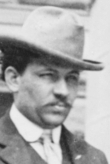
Petto, his wife and two young children relocated to Browntown, just south of Pittston, in the summer of 1905. There, under the name of Luciano Perrino, he quickly established himself as leader of a band of Black Hand terrorists. As fronts for his underworld activities, he opened a grocery and a butcher shop along South Main Street in the downtown area, a short distance from the Susquehanna River.

At about the time of his arrival, a Browntown resident named Frank Culloro was murdered. Culloro's body was found along Cork Lane near an old mine shaft. His head was found later at the bottom of the shaft. Some in the area believed the newcomer was responsible.

On the evening of Saturday, Oct. 21, 1905, Petto remained at his butcher business until quite late and then began the long walk across town to his home on Lincoln Street. At about 10:30, just a few paces from his front door, he was alerted to some danger and pulled out the .38-caliber revolver he carried with him. He would not have the opportunity to use the weapon. At that moment, he was struck in the right side by a blast of small-caliber shot fired at close range. The pellets embedded into his right arm, right side and right hip. At almost the same moment, additional shots were fired, and larger caliber slugs pierced Petto's body.

A large chunk of lead tore into the right side of his chest and proceeded downward, severing the spinal column and leaving the body below the spleen, leaving a gaping exit wound. Another projectile, more than a half inch in diameter and with jagged edges, struck Petto between his eighth and ninth ribs and lodged in his liver. A third slug smashed Petto's handgun and ripped apart his hand. A fourth cracked into his right elbow and smashed the bones almost to dust.

Neighbors initially thought little of the autumn evening explosions, as hunting was common in the area. But the blasts brought Petto's wife out of the house. She found her husband dead on the ground. She saw little if anything of the gunmen who took his life. At a coroner's inquest the next week, she testified that she recalled seeing one man dressed in white in the area.

Following the inquest, the coroner's jury decided that Petto was killed by person or persons unknown. No clues were ever found to the identities of Petto's killers, but many were sure they knew who was responsible. Newspapers and law enforcement officers speculated that Giuseppe DiPrimo, recently released from Sing Sing Prison, had avenged himself on the murderer of his brother-in-law Madonia. It was a good story, but Petto reportedly had many enemies other than DiPrimo. William Flynn of the U.S. Secret Service stated that DiPrimo could have had nothing to do with the Petto killing, as he was not yet out of prison at the time it occurred. (The timing of DiPrimo's release is uncertain as of this writing. He was sentenced to four years and could have been paroled in plenty of time to track down and kill Petto. If not paroled, his sentence with good time allowance would have expired too late.)

Petto was buried in the Market Street Cemetery, also known as St. John the Evangelist Cemetery, in Pittston. After the household contents were sold off, his wife took the children to New York City and moved in with her parents there.

See also:


Sources:

  •  "Came from Buffalo,” Fitchburg (MA) Sentinel, Apr. 21, 1903, p. 7.
  •  "Mafia murder gang are all in police net," New York Evening World, April 25, 1903, p. 1.
  •  "No pistols for Mafia," New York Evening World, April 29, 1903, p. 2.
  •  "Have complete chain of evidence," New York Tribune, April 30, 1903, p. 6.
  •  "Six held in Mafia case," New York Evening World, May 8, 1903, p. 1.
  •  "'The Ox' goes free in barrel murder," New York Evening World, Jan. 29, 1904, p. 2.
  •  "'The Ox' may yet be put on trial," New York Evening World, Feb. 3, 1904, p. 5.
  •  "Black Hand leader killed," Scranton PA Republican, Oct. 23, 1905, p. 4.
  •  "Mysterious murder in village of Browntown," Pittston PA Gazette, Oct. 23, 1905, p. 1.
  •  "No clue discovered," Wilkes-Barre PA Record, Oct. 24, 1905, p. 5.
  •  "Perino murder still unsolved," Scranton PA Truth, Oct. 24, 1905, p. 1.
  •  "No clue whatever yet," Pittston PA Gazette, Oct. 24, 1905, p. 1.
  •  "Petto, the Ox, murder victim," New York Sun, Oct. 24, 1905, p. 5.
  •  "May have good clue," Pittston PA Gazette, Oct. 25, 1905, p. 1.
  •  "Revenge on Black Hand," Washington Post, Oct. 26, 1905, p. 1.
  •  "The murder mystery," Pittston PA Gazette, Oct. 27, 1905, p. 1.
  •  "Parrino inquest," Wilkes-Barre PA Record, Oct. 28, 1905, p. 5.
  •  "Reign of crime near Pittston," Wilkes-Barre PA Times Leader, Dec. 20, 1905, p. 26.
  •  Carey, Arthur A., with Howard McLellan, Memoirs of a Murder Man, Garden City NY: Doubelday, Doran and Company, 1930, p. 121.
  •  Flynn, William J., Daily Report, April 20, 29, 30 1903, Department of the Treasury, United States Secret Service Daily Reports, R.G. No. 87, Roll 109, Vol. 9, National Archives.
  •  Flynn, William J., The Barrel Mystery, New York: James A. McCann Company, 1919, p. 13-14, 16-17, 22.
  •  Petacco, Arrigo, translated by Charles Lam Markham, Joe Petrosino, New York: Macmillan Publishing Co., 1974, p. 9, 14.

Strollo, Antonio (1899-1962)

b. New York, NY, June 14, 1899.
disappeared from Fort Lee, NJ, April 8, 1962.

A longtime leader in the Genovese Crime Family, Anthony "Tony Bender" Strollo oversaw rackets in Greenwich Village and on the East Side of Manhattan. Strollo was a longtime ally of Vito Genovese, but the two apparently had a serious falling out after Genovese was convicted on narcotics charges. The conflict proved fatal for Strollo.

Antonio Strollo was born in New York City on June 14, 1899, to Leone and Jennie Strollo, immigrants from Italy. He had two older siblings, brothers Samuel and Dominick. In the early 1900s, Leone Strollo was a laborer, and the family lived at 181 Thompson Street in Manhattan's Greenwich Village. The family address changed only slightly, to 177 Thompson Street, by 1920. At that time, Leone Strollo ran his own candy store and his sons Antonio and Dominick worked as teamsters / truck drivers.

Antonio Strollo appears to have been married just after 1920. He and a wife named Rose can be found in the 1930 U.S. Census in a Thompson Street apartment. Strollo still claimed to be working as a truck driver at the time, but he was already engaged in racketeering, likely as a part of the Giuseppe Masseria Mafia organization. The marriage with Rose did not survive long after 1930 (Rose's fate is uncertain as of this writing).

During the 1930-31 Castellammarese War, Strollo sided with Masseria, Charlie Luciano and Vito Genovese. Following the brief reign of Salvatore Maranzano, Strollo became a lieutenant in the Luciano organization and a key ally of Genovese. Joseph Valachi was one of the Mafiosi under the command of Strollo.

Strollo's business interests at the time included numerous night clubs and restaurants. He also oversaw rackets at Manhattan's West Side docks.

At the end of March 1932, Strollo married again. This time, his bride was Edna Goldenberg, a New York native. The couple traveled to Bermuda in the spring for a honeymoon, returning to New York on May 25. Their home for a time was 45 Christopher Street in the Village. The 1940 U.S. Census shows two daughters in the home.

Soon after, the Strollos relocated across the Hudson River in the area of Fort Lee, New Jersey. Strollo's racket territory increased, and he became a power on the Jersey City docks by the early 1950s. A political scandal was triggered when news got out of a March 14, 1952, meeting between Strollo and Jersey City Mayor John V. Kenny. Kenny tried for a time to deny the meeting, arranged by actor Phil Regan and held in Regan's suite at Manhattan's Warwick Hotel, but eventually acknowledged that it took place. Kenny said he met with Strollo in order to resolve some conflicts with labor along the docks.

Strollo is believed to have pushed Anthony Provenzano into leadership positions of Local 560 of the International Brotherhood of Teamsters. Provenzano started his career in organized labor (and likely also in labor racketeering) as the Local 560 shop steward for the H.P. Welch Company. He eventually won election to the local presidency. Provenzano would become a strong ally and later a determined enemy of Teamsters President James R. Hoffa.

By the late 1950s, the New York Police Department reported that Strollo oversaw loan sharking, bookmaking and gambling activities in the Greenwich Village area and managed his underworld enterprises from a growing collection of nightclubs, bars and coffee houses.

As one of the last people to see Anthony "Little Augie Pisano" Carfano alive, Strollo was a leading suspect in the Carfano murder in September 1959. Strollo, Carfano, Mrs. Alan Drake and several others spent time together at the Copacabana and at Marino's Restaurant, 716 Lexington Avenue, before Carfano and Drake hurriedly left together, following a telephone call to Carfano at Marino's. Carfano and Drake were found shot to death in a car parked in Jackson Heights, Queens.

Federal narcotics charges resulted in hefty prison sentences for Vito Genovese, Joe Valachi and others around 1959. Strollo escaped punishment but was a likely participant in the narcotics offenses. When Valachi attempted to jump bail and leave the country, Strollo convinced him to return to New York City. Valachi may have provided information to federal authorities before this time, but his experiences in prison - particularly his sense that then-crime family boss Vito Genovese had branded him a traitor - led him to cooperate fully and enthusiastically with the Justice Department.

At almost the same moment that Genovese turned on Valachi, Genovese ordered that Strollo be eliminated. At about 10 p.m. on April 8, 1962, Strollo told his wife he needed to go out. She later reported to police that he drove off with an unknown associate in a 1961 Cadillac. Strollo was never seen or heard from again.

Strollo's rackets in the Genovese Crime Family were handed over to Pasquale "Patsy Ryan" Eboli, brother of Thomas Eboli.

Later in the year, the FBI monitored a conversation between Mafiosi Anthony Russo and Angelo "Gyp" DeCarlo. In that conversation, Russo told of an earlier talk he had with Ruggiero "Richie the Boot" Boiardo and Chicago Outfit boss Sam Giancana. Boiardo apparently was taking complete credit for the murder of Antonio Strollo and made no mention of an order from Vito Genovese.

Sources:

  •  New York City Birth Records, Certificate no. 22743, June 14, 1899
  •  United States Census of 1900, New York State, New York County, Enumeration District 1062.
  •  United States Census of 1920, New York State, New York County, Ward 8, Assembly District 2, Enumeration District 204.
  •  New York State Census of 1925, Kings County, Assembly District 7, Election District 22.
  •  United States Census of 1930, New York State, New York County, Assembly District 2, Enumeration District 31-68.
  •  New York City Marriage Index, Certificate no. 7134, March 30, 1932.
  •  Passenger manifest of S.S. Monarch of Bermuda, departed from Hamilton, Bermuda, on May 23, 1932, arrived New York on May 25, 1932.
  •  United States Census of 1940, New York State, New York County, Assembly District 10, Enumeration District 31-884.
  •  Grutzner, Charles, "Kenny admitted lie to jury on talk with pier gangster; police got $108,000 bribe bid," New York Times, Dec. 18, 1952.
  •  Perlmutter, Emanuel, "New lead on Pisano slaying provided by racketeer friend," New York Times, Oct. 1, 1959, p. 30.
  •  "Pisano hurried to his death after mysterious phone call," New York Times, Oct. 2, 1959, p. 16.
  •  Hindes, Eugene J., "Salvatore Granello...," FBI report 92-3960-30, NARA no. 124-90066-10093, June 27, 1962, p. 44.
  •  Flynn, James P., "Crime conditions in the New York division," FBI report CR 62-9-34-692, NARA no. 124-10348-10068, Dec. 3, 1962, p. 21-22.
  •  Andrews, Leon F. Jr., "La Causa Nostra Buffalo Division," FBI report 92-6054-296, NARA no. 124-10200-10453, June 14, 1963, p. 24-27.
  •  "Sketches of gangland figures named by Valachi in Senate testimony," New York Times, Sept. 28, 1963, p. 6.
  •  Donnelly, Frank H., "Anthony Provenzano aka Tony Pro," FBI report 92-7195-2, NARA no. 124-10221-10186, Dec. 20, 1963, p. 6-7.
  •  Valachi, Joseph, "The Real Thing: Second Government: The Expose and Inside Doings of Cosa Nostra," Joseph Valachi Personal Papers, John F. Kennedy Presidential Library and Museum, 1964, p. 370.
  •  Durkin, Paul G., "Harold Konigsberg," FBI report CR 9205177-161, NARA no. 124-10348-10067, Aug. 16, 1965, p. 135.
  •  "F.B.I.-taped conversation sheds light on 1962 gangland slaying of Strollo," New York Times, Jan. 8, 1970, p. 33.

Abbatemarco, Anthony (1922-2005)

b. Brooklyn, NY, April 6, 1922.
d. July 17, 2005.

Related to several independent-spirited Profaci-Colombo Crime Family mobsters who met with violent ends, Anthony Abbatemarco attained a leadership position within the organization and reached a ripe, old age.

Born in Brooklyn on April 6, 1922, Anthony Abbatemarco was the first child of Frank and Mary Abbatemarco. The family lived at 702 President Street in the Park Slope section, just outside of Gowanus. On the same city block resided Anthony's grandmother Rosa and his uncle Dominick.

Frank Abbatemarco and his brother, Anthony's uncle Michael (known as "Mike Schatz"), were members of Frankie Yale's Brooklyn underworld organization at the time of Yale's assassination on July 1, 1928. The Yale gangsters appear to have been absorbed into the Mafia families of Giuseppe Masseria and Giuseppe Profaci. Michael, a Prohibition Era beer baron, may not have approved of the new arrangements. He was murdered just three months after his former boss. Frank Abbatemarco, who acquired his brother's "Schatz" nickname, apparently was more agreeable and became a soldier in the Profaci family. Anthony eventually would follow his father into that organization.

Frank grew in importance in the underworld of Brooklyn through the 1930s, specializing in gambling. Anthony, after serving in the military during World War II, joined in his father's policy (numbers) rackets. He became known to his associates as "Tony Shots."

In March of 1952, father and son were arrested along with young Gowanus-area mobsters Carmine Persico, Lawrence Gallo and Joey "Joe the Blond" Gallo, and several others involved in the Brooklyn numbers. Anthony, who claimed to be unemployed, was found to be holding a thick roll of bills totaling $2,400, and police noted he had recently purchased a new Lincoln automobile valued at $3,800. Authorities labeled Anthony the No. 2 man in the ring managed by Frank. Frank and Anthony pleaded guilty to lottery conspiracy charges on June 24, 1952. Both were sentenced to terms at Riker's Island Penitentiary - Frank for a year and Anthony for nine months.

When they were released from prison, the Abbatemarcos rejoined their old organization and went right back to work in the lucrative policy racket.

In the late 1950s, Frank Abbatemarco's crew began withholding tribute payments expected by crime family boss Profaci. As a result, the boss ordered the murders of both Frank and Anthony, and he called on the Gallos to perform the executions. Frank was executed on Nov. 4, 1959.

Learning of his father's murder, Anthony went into hiding. The Gallos expected to be rewarded for their efforts by being granted control of the policy racket, but Profaci instead gave that to his own relatives. Lawrence and Joey Gallo, their brother Albert and a number of allies openly rebelled against Profaci. Carmine Persico, initially part of the rebellion, switched to Profaci's side very early in the conflict. The Gallos forced concessions from Profaci early in 1961 by kidnapping several high-ranking Profaci crime family leaders, but Profaci reneged and condemned the rebels to death.

Gallo gunmen Joseph "Joe Jelly" Giorelli disappeared in August 1961. After he had been missing a few days, Profaci sent the rest of the gang a message: A bundle was thrown from a passing car near the gang hangout. It contained Giorelli's coat wrapped around a dead fish.

Later that month, Anthony Abbatemarco reappeared. Perhaps learning of the Gallos' insurrection and of their involvement in his father's murder - but not yet of Profaci's own role in those events - Anthony assisted in the Profaci-approved Aug. 20 attempted murder of Lawrence Gallo at a South Brooklyn restaurant. Carmine Persico is believed to have led Gallo to the location. The hit was interrupted by a passing patrolman, who was shot as Gallo's attackers fled. From his hospital bed, the patrolman identified Anthony Abbatemarco as the person who shot him. Abbatemarco was arrested and charged with the attempted murder of a police officer.

On the afternoon of Oct 4, Abbatemarco's cousin Joseph Magnasco - an important member of the Gallo faction - was shot to death on the sidewalk. Knowing of Magnasco's underworld connections, police immediately raided the headquarters of Direct Vending Corporation at 51 President Street, a front for Gallo rackets. They took 11 men in for questioning. The group included Lawrence and Joey Gallo, and, somewhat surprisingly, Anthony Abbatemarco. During the six weeks following the attempt on Lawrence Gallo's life, the Gallos apparently had an opportunity to set Abbatemarco straight on who was ultimately to blame for his father's murder.

Abbatemarco was with Lawrence and Albert Gallo (Joey Gallo was in prison), Leonard Dello, Alfonso Serantino, John Commarato and Frank "Punchy" Illiano on Jan. 31, 1962, as they entered a burning third-floor apartment to rescue six children. The group was interviewed and photographed for the newspapers. at the time, Albert Gallo commented, "We'll probably get locked up for putting out a fire without a license."

Anthony Abbatemarco (top left), with Albert Gallo,
Frank Illiano and the six children they rescued
from a burning apartment in 1962.

The Gallo rebellion continued through the death of Profaci on June 6, 1962, and through the troubled reign of Profaci's successor Giuseppe Magliocco. By 1964, Joseph Colombo took leadership of the crime family with the approval of the Mafia Commission. Colombo entered into negotiations with the Gallo faction in an effort to put a stop to the long conflict.

In this period, Abbatemarco abandoned the Gallo cause and supported Colombo, though the Gallo group's cooperation with Colombo quickly ended. Abbatemarco became part of a crew commanded for a time by the aging Salvatore "Charlie" Mineo (who also served in a top leadership post in the crime family). Also in the crew was Joseph Yacovelli. Early in 1965, the leadership of the crew was changed due to Mineo's poor health, and Abbatemarco found himself directly (and probably uncomfortably) subordinate to Carmine Persico.

After just a few years of relative calm, the crime family once again became unsettled. Persico was convicted of hijacking in 1968. Lawrence Gallo succumbed to cancer in the same year. Crime boss Joseph Colombo was shot and critically wounded on June 28, 1971, and "Crazy Joey" Gallo was believed responsible. Colombo was incapacitated by the shooting but did not die until May 22, 1978. Joey Gallo did not live as long. He was murdered while dining with friends at Umberto's Clam House in Manhattan in April 1972. A new "Gallo War" raged in the crime family, and the Gallo faction was split with the defection of John Cutrone and his allies to a growing Persico faction.

A series of interim bosses were selected in the crime family, and Joseph Yacovelli reportedly served in that role. However, real power settled on Carmine Persico and his brother and son. Abbatemarco and Yaccovelli became leading figures in a dissident faction, and gradually Abbatemarco emerged as the top man in that faction.

Abbatemarco fell into the habit of having "business-related" conversations in his automobile, a habit that was noticed by the FBI. Between May and September of 1974, the FBI listened in on his conversations through a surveillance device installed in the car. As the listening device was removed, the FBI informed Abbatemarco that it had been used. The recorded conversations, a number of them dealing with Abbatemarco's analysis of the strength of the Gambino Crime Family and its declining boss Carlo Gambino, were brought before a federal grand jury. Abbatemarco was subpoenaed but did not appear in U.S. District Court. Abbatemarco was plagued with alcoholism and anxiety and was unfit to testify in court, his attorney argued. The court received a doctor's note indicating that Abbatemarco's "judgment, thinking and memory" were "severely impaired."

The following year, Staten Island-based capodecina Thomas DiBella was placed in control of crime family operations. Under DiBella's watch an agreement was finally reached in the long struggle with the Gallo gang. Albert Gallo, the last surving Gallo brother, and other members of the group (including Frank "Punchy" Illiano) were permitted to leave the Colombo Crime Family and join with the Genovese organization.

In the mid-1970s, federal investigators learned that Abbatemarco was serving as the Colombo Crime Family underboss. In the fall of 1976, several crime family lieutenants approached him and Yaccovelli, then reportedly consigliere, to complain about the Persico-favoritism demonstrated by DiBella. New York crime families had agreed to "open the books" and induct new members in 1976, and DiBella reportedly gave 15 of the crime family's 33 approved new membership slots to the Persico faction, splitting the remainder among the other crime family crews. Reports indicate that Abbatemarco and Yaccovelli took the complaints to the Mafia leadership Commission, asking that DiBella be removed. The request was denied.

This amounted to a dangerous break between the Abbatemarco faction and DiBella. A meeting was called to resolve the dispute in May 1977. Abbatemarco and Yacovelli kept a safe distance. But ally Salvatore Albanese, a tough enforcer for the faction, attended a dinner sit-down with Persico and DiBella-aligned mobsters. Albanese was not seen after the dinner.

Abbatemarco reportedly went into hiding in upstate New York, turning operation of his gambling empire over to subordinates, and Yacovelli stopped following his normal daily routines.

While removed from the day-to-day activities of the crime family, Abbatemarco lived long enough to see the Persico faction split into two warring factions. He died in the summer of 2005.

Link:


Sources:

  •  Bonanno, Bill, and Gary B. Abromovitz, The Last Testament of Bill Bonanno: The Final Secrets of a Life in the Mafia, New York: Harper, 2011.
  •  Carr, Charlie, New York Police Files on the Mafia, Hosehead Productions, 2012.
  •  Cook, Fred, MAFIA! Greenwich, CT: Fawcett Gold Medal, 1973.
  •  Cressey, Donald R., Theft of the Nation, New York: Harper Colophon, 1969.
  •  Gage, Nicholas, Mafia USA, New York: Playboy Press, 1972. 
  • Raab, Selwyn, Five Families: The Rise, Decline and Resurgence of America’s Most Powerful Mafia Empires, New York: Thomas Dunne Books, 2006.
  •  New York State Census of 1925.
  •  SAC New York, “La Cosa Nostra,” FBI memo, Jan. 21, 1965, NARA no. 124-10223-10353.
  •  Social Security Death Index.
  •  U.S. Census of 1930.
  •  “Ex-convict seized in policy ring raid,” New York Times, March 26, 1952.
  •  “Raids smash $2,500,000 policy ring,” Brooklyn Daily Eagle, March 26, 1952, p. 1.
  •  “9 deny lottery charges,” New York Times, April 16, 1952.
  •  “Two gunmen kill gambling figure,” New York Times, Nov. 5, 1959.
  •  “Mafia strikes boro again! Police hunt killers here,” Brooklyn Daily, Nov. 6, 1959, p. 3.
  •  Clark, Alfred E., “Gallo case figure slain in Brooklyn,” New York Times, Oct. 5, 1961, p. 1.
  •  “Gallo figure gunned down,” Long Island Star-Journal, Oct. 5, 1961, p. 1.
  •  “Fear shooting may cause new violence,” Brooklyn Daily, Oct. 6, 1961, p. 3.
  •  “Gallo gang saves 6 tots from blaze,” Syracuse NY Post Standard, Feb. 1, 1962, p. 2. 
  •  “Cops praise mobsters for saving 6 in fire,” Bridgeport CT Post, Feb. 1, 1961, p. 16.
  •  “Profaci dies of cancer; led feuding Brooklyn mob,” New York Times, June 8, 1962.
  •  Buckley, Thomas, “Ex-detective chief says gang war dooms Gallos,” New York Times, Aug. 15, 1963
  •  Farrell, William E., “Colombo shot, gunman slain at Columbus Circle rally site,” New York Times, June 29, 1971, p. 1.
  •  Gage, Nicholas, "Yacovelli said to succeed Colombo in Mafia Family," New York Times, Sept. 1, 1971.
  •  “U.S. agents wiretapped Colombo aide 4 months,” New York Times, Oct. 8, 1974.
  •  Gage, Nicholas, “Colombo family underboss flees after failure to overthrow chief,” New York Times, June 5, 1977.
  •  “Joseph A. Colombo Sr., 54, paralyzed in shooting at 1971 rally, dies,” New York Times, May 24, 1978.
  •  Krajicek, David J., “Frankie Abbatemarco is the opening casualty in the Profaci family civil war,” New York Daily News, Sept. 19, 2010.