Showing posts with label DiGiovanni. Show all posts

Gargotta, Charles (c1902-1950)

Born c1902.

Killed Kansas City, MO, April 5, 1950.

Charles "Mad Dog" Gargotta, once part of the Pendergast political machine in Kansas City, was murdered alongside local crime boss Charles Binaggio in the spring of 1950.

Gargotta was known to be a part of the local rackets from the days of boss John Lazia. He served as pallbearer for Lazia after the boss was shot down in 1934.

A veteran of the penitentiary (he served 19 months after being convicted of assault with intent to kill), Gargotta was a key man in the Binaggio criminal organization. In addition to running a gambling empire, Binaggio was also a political leader in the First Ward of Kansas City (North Side). Binaggio was closely allied to Pendergast before breaking off from that organization and openly challenging the declining political machine in 1948.

On the evening of April 5, 1950, Binaggio and Gargotta borrowed a car and drove to meet someone they trusted (Binaggio's usual bodyguard was told he did not need to come along) at the Jackson County Democratic Club on Truman Road. The two men were shot to death within the political headquarters.

A taxi driver later discovered the bodies. Both men were found with four bullet wounds to the head. Binaggio's body lay in a chair at the rear of the club. Gargotta was found sprawled on the floor near the door, where he had apparently grabbed at Venetian blinds after being shot.

The elimination of Binaggio and Gargotta was followed by an apparent return to power of the old Sicilian Mafia organization of Joseph DiGiovanni and James Balestrere.

After the murders, authorities revealed that Gargotta had been supplying the government with information on a large-scale gambling ring operating in the Kansas City area.

Related Links:
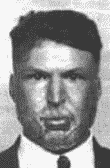
DiGiovanni, Joseph (1888-1971)

Born Chiusa Sclafani, Sicily, April 23, 1888.

Died Kansas City, Aug. 5, 1971.


"Joe Church" DiGiovanni is among the earliest known Mafia bosses of Kansas City, MO. His family roots extend back to Chiusa Sclafani in Sicily. He entered the United States in 1903.

Once settled in Kansas City, Joseph and his brothers Paul and Pietro/Peter (known as "Sugarhouse Pete") reportedly engaged in Black Hand extortion and kidnapping within the local Italian communities. Paul DiGiovanni appears to have served as boss of the operation in its early stages and into the Prohibition Era (Paul died in 1929). According to legend, an attempt to firebomb a building in order to collect on its insurance resulted in an unexpected explosion that left Joseph permanently scarred on his face and hands.

Black market opportunities presented themselves during the First World War, and the DiGiovannis - who ran a wholesale grocery - took full advantage. Joseph DiGiovanni became partners with James Balestrere in a Prohibition Era bootlegging operation.

The U.S. Senate's Kefauver Committee interviewed the sixty-two-year-old DiGiovanni in the summer of 1950. At that time, he and his brother Peter ran a wholesale liquor distributorship affiliated with the Seagram's company. DiGiovanni denied any knowledge of the Mafia. He denied ever even hearing of the word "Mafia." He insisted that he had never been arrested or questioned by police.

Peter DiGiovanni, then sixty-four (born June 28, 1886), also appeared before the Kefauver Committee. He acknowledged being arrested repeatedly for bootlegging during the Prohibition Era. He said he was never convicted.

The Kefauver Committee concluded that Joseph DiGiovanni and James Balestrere still served as the top men in the Kansas City underworld.

Related Links:

Balestrere, James (1891-c1959)

Born Bagheria, Sicily, June 24, 1891.

Died Kansas City, MO, Oct. 19, 1959.

Born near Palermo, Sicily, Balestrere initially settled with his family in Milwaukee(1), in spring 1903(2). When he was a teenager, his family moved to the Kansas City area.
Balestrere became a big shot in the Kansas City outfit during Prohibition. Though a stone mason(3) by trade, he is believed to have teamed with the DiGiovanni brothers - Joseph and Pietro - in a bootlegging-related venture, supplying sugar to moonshine operations.(4)

After Prohibition the K.C. mob appeared to be under the control of Charles Binaggio, connected to the Pendergast political machine. Binaggio might also have had a hand in St. Louis-area gambling(5). Some believe Binaggio was merely a front man, while underworld orders continued to come from Joseph DiGiovanni(6).

At that time, Balestrere put his mason skills to use constructing a local restaurant/casino. (He previously worked operating a grocery store and a drug store.) The gambling establishment became known as "the White House." In the late 1930s, Balestrere also managed a keno game for Pendergast.(7)

Binaggio and his chief lieutenant Charles "Mad Dog" Gargotta were murdered on April 5, 1950, at a political headquarters(8). At the time, Missouri Senator James P. Kem called the murders an outgrowth of "the unholy alliance between politics and the underworld in Kansas City."(9).

Balestrere reportedly was a senior partner in the leadership group that followed Binaggio (or one which existed for some time under cover of Binaggio). Control of the K.C. mob looks to have been shared by Balestrere, Thomas "Tano" Lococo, Charles Carollo and former Binaggio ally Anthony Gizzo(10).

Some pronounce Gizzo the supreme boss in the city's underworld from 1950 until his death of natural causes(11). However, the Kefauver Committee, after hearing Balestrere's testimony in September 1950, decided that Balestrere was the big man(12).

Related Links:

Notes:
  1. . Fox, Blood and Power, p. 37. A Mafia clan in Milwaukee had a similar-sounding name spelled "Balestrieri" or "Balestreri."
  2. . Passport application dated Feb. 21, 1923; U.S Census Records, 1930.
  3. . Ibid. World War I Draft Records, 1917.
  4. . Fox, op. cit. In testimony before the Kefauver Committee, Sept. 30, 1950, Balestrere admitted only to supplying sugar to those engaged in the manufacture of "moonshine": "Kefauver clears Kansas City police," New York Times, Oct. 1, 1950, p. 81. Roots of the sugar business were traced back to a black market enterprise during World War I: May, Allan. "The History of the Kansas City Family," ItalKC.com.
  5. . Kefauver Committee Report #3.
  6. . "Organized Crime Syndicates" website - Kansas City
  7. . "Kefauver clears...," op. cit.
  8. . "Binaggio, Kansas City political figure...," Sedalia (Mo) Democrat, Apr. 6, 1950, p. 1.
  9. . "President asked to halt Kansas City crime wave," Sikeston (Mo) Herald, Apr. 20, 1950, p. 10.
  10. . Kefauver Committee, op. cit. Virgil Peterson testimony to Kefauver panel.
  11. . "Organized Crime Syndicates," op. cit.
  12. . Kefauver Committee, op. cit.
  13. . Hayde, Frank R., The Mafia and the Machine, Fort Lee NJ: Barricade, 2007; "James G. Balestrere," Find-a-Grave ( http://www.findagrave.com/cgi-bin/fg.cgi?page=gr&GRid=16782970 ).