Showing posts with label Manhattan. Show all posts

Petto, Tomasso (1879-1905)

Born Province of Palermo, Sicily, c1879.
Killed Browntown, Pittston, PA, Oct. 21, 1905.

Tomasso Petto, also known as Luciano Perrino (also written about as Luciano Parrino and Tom Carrillo), was a brutal enforcer for the early Morello Mafia in New York City. He participated in counterfeiting operations and "Black Hand" extortion schemes. After establishing himself as a Black Hand leader in northeastern Pennsylvania in 1905, he was murdered in an apparent gangland "hit."

Petto acquired the nickname "Il Bove," meaning "The Ox," because of his physique. He stood about five-feet-eight-inches tall and weighed approximately 220 pounds, nearly all of it muscle. His shoulders, arms, legs and neck were massive. Once, when he was being placed under arrest, he put his arms around the body of a detective - said to be the most powerfully built man on the New York police force - and nearly squeezed the life out of the man.

Petto became the prime suspect in the Barrel Murder case of April 1903, when police found him in possession of a pawn ticket for a watch owned by the victim, Benedetto Madonia. The murder was closely linked with the counterfeiting operations of Mafia boss of bosses Giuseppe Morello - a disciplinary action against Madonia's imprisoned brother-in-law Giuseppe DiPrimo, who was believed (wrongly) to have cooperated with the authorities. Though Petto was indicted for the murder, he never stood trial. State witnesses hesitated to testify against him, evidence linking him to the murder was lacking and there was official confusion over his identity - some mixed him up with Morello mobster Giovanni Pecoraro. After months locked in the Tombs prison awaiting trial, Petto was discharged on Jan. 29, 1904.

He returned to his old haunts on Mulberry Street and Mott Street and celebrated his release with friends. U.S. Secret Service operatives kept an eye on him, as he remained a counterfeiting suspect. During the evening of Jan. 29, he reportedly received a telephone call at a Mott Street restaurant. After the call, he apologized to his friends and quickly left the city. Secret Service agents tracked him to Port Chester, New York. He did not remain in Port Chester for long.

In the spring of 1905, Petto reportedly ran into some trouble with the Secret Service, as he had been involved in the sale of unlicensed cigars in West Virginia. He and his young family had just settled into a new residence in Old Forge, Pennsylvania (between Scranton and Pittston), when he was arrested for the offense and made to pay a heavy fine.
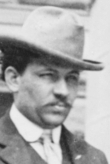
Petto, his wife and two young children relocated to Browntown, just south of Pittston, in the summer of 1905. There, under the name of Luciano Perrino, he quickly established himself as leader of a band of Black Hand terrorists. As fronts for his underworld activities, he opened a grocery and a butcher shop along South Main Street in the downtown area, a short distance from the Susquehanna River.

At about the time of his arrival, a Browntown resident named Frank Culloro was murdered. Culloro's body was found along Cork Lane near an old mine shaft. His head was found later at the bottom of the shaft. Some in the area believed the newcomer was responsible.

On the evening of Saturday, Oct. 21, 1905, Petto remained at his butcher business until quite late and then began the long walk across town to his home on Lincoln Street. At about 10:30, just a few paces from his front door, he was alerted to some danger and pulled out the .38-caliber revolver he carried with him. He would not have the opportunity to use the weapon. At that moment, he was struck in the right side by a blast of small-caliber shot fired at close range. The pellets embedded into his right arm, right side and right hip. At almost the same moment, additional shots were fired, and larger caliber slugs pierced Petto's body.

A large chunk of lead tore into the right side of his chest and proceeded downward, severing the spinal column and leaving the body below the spleen, leaving a gaping exit wound. Another projectile, more than a half inch in diameter and with jagged edges, struck Petto between his eighth and ninth ribs and lodged in his liver. A third slug smashed Petto's handgun and ripped apart his hand. A fourth cracked into his right elbow and smashed the bones almost to dust.

Neighbors initially thought little of the autumn evening explosions, as hunting was common in the area. But the blasts brought Petto's wife out of the house. She found her husband dead on the ground. She saw little if anything of the gunmen who took his life. At a coroner's inquest the next week, she testified that she recalled seeing one man dressed in white in the area.

Following the inquest, the coroner's jury decided that Petto was killed by person or persons unknown. No clues were ever found to the identities of Petto's killers, but many were sure they knew who was responsible. Newspapers and law enforcement officers speculated that Giuseppe DiPrimo, recently released from Sing Sing Prison, had avenged himself on the murderer of his brother-in-law Madonia. It was a good story, but Petto reportedly had many enemies other than DiPrimo. William Flynn of the U.S. Secret Service stated that DiPrimo could have had nothing to do with the Petto killing, as he was not yet out of prison at the time it occurred. (The timing of DiPrimo's release is uncertain as of this writing. He was sentenced to four years and could have been paroled in plenty of time to track down and kill Petto. If not paroled, his sentence with good time allowance would have expired too late.)

Petto was buried in the Market Street Cemetery, also known as St. John the Evangelist Cemetery, in Pittston. After the household contents were sold off, his wife took the children to New York City and moved in with her parents there.

See also:


Sources:

  •  "Came from Buffalo,” Fitchburg (MA) Sentinel, Apr. 21, 1903, p. 7.
  •  "Mafia murder gang are all in police net," New York Evening World, April 25, 1903, p. 1.
  •  "No pistols for Mafia," New York Evening World, April 29, 1903, p. 2.
  •  "Have complete chain of evidence," New York Tribune, April 30, 1903, p. 6.
  •  "Six held in Mafia case," New York Evening World, May 8, 1903, p. 1.
  •  "'The Ox' goes free in barrel murder," New York Evening World, Jan. 29, 1904, p. 2.
  •  "'The Ox' may yet be put on trial," New York Evening World, Feb. 3, 1904, p. 5.
  •  "Black Hand leader killed," Scranton PA Republican, Oct. 23, 1905, p. 4.
  •  "Mysterious murder in village of Browntown," Pittston PA Gazette, Oct. 23, 1905, p. 1.
  •  "No clue discovered," Wilkes-Barre PA Record, Oct. 24, 1905, p. 5.
  •  "Perino murder still unsolved," Scranton PA Truth, Oct. 24, 1905, p. 1.
  •  "No clue whatever yet," Pittston PA Gazette, Oct. 24, 1905, p. 1.
  •  "Petto, the Ox, murder victim," New York Sun, Oct. 24, 1905, p. 5.
  •  "May have good clue," Pittston PA Gazette, Oct. 25, 1905, p. 1.
  •  "Revenge on Black Hand," Washington Post, Oct. 26, 1905, p. 1.
  •  "The murder mystery," Pittston PA Gazette, Oct. 27, 1905, p. 1.
  •  "Parrino inquest," Wilkes-Barre PA Record, Oct. 28, 1905, p. 5.
  •  "Reign of crime near Pittston," Wilkes-Barre PA Times Leader, Dec. 20, 1905, p. 26.
  •  Carey, Arthur A., with Howard McLellan, Memoirs of a Murder Man, Garden City NY: Doubelday, Doran and Company, 1930, p. 121.
  •  Flynn, William J., Daily Report, April 20, 29, 30 1903, Department of the Treasury, United States Secret Service Daily Reports, R.G. No. 87, Roll 109, Vol. 9, National Archives.
  •  Flynn, William J., The Barrel Mystery, New York: James A. McCann Company, 1919, p. 13-14, 16-17, 22.
  •  Petacco, Arrigo, translated by Charles Lam Markham, Joe Petrosino, New York: Macmillan Publishing Co., 1974, p. 9, 14.

Gigante, Vincent "the Chin" (1928-2005)

Born New York, NY, March 29, 1928.

Died Springfield, MO, Dec. 19, 2005.

Genovese Crime Family boss "Vinny the Chin" Gigante evaded law enforcement for many years by playing the role of mentally ill street person. He gave up the act in an April 2003 court hearing, six years after being locked up.

Gigante died Monday, Dec. 19, 2005, at the federal prison in Springfield, Mo. He was 77 years old. Born in 1928 to Vincent and Yolanda Gigante, Neapolitan residents of the Lower West Side of Manhattan, Gigante's "Chin" nickname was adapted from his given name of "Vincenzo." His father was employed as a jewelry engraver.

The family resided for many years along Thompson Street, within the traditional confines of Greenwich Village. Gigante likely met fellow Thompson Street resident and Genovese Crime Family member Venero "Benny Eggs" Mangano when the two were young men.

Gigante had a brief career as a prizefighter, beginning in 1946. His criminal career was considerably longer, spanning half a century. He became an underworld protege of New York Mafia bigshot Vito Genovese, who controlled Greenwich Village. Gigante first became known to the American public as the prime suspect in the May 1957 assassination attempt against Mafia leader Frank Costello. It is believed that Gigante, working under orders from Costello rival Genovese (orders reportedly transmitted through group leader Tommy Eboli) cornered Costello in the lobby of his apartment house and shot him in the head at close range.

The bullet only grazed Costello, however. Costello's refusal to testify against Gigante, a man Costello insisted was "a friend," led to Gigante's acquittal. Costello retired as boss of the Luciano family, leaving the operation to Genovese.

Gigante was convicted of drug trafficking in 1959 and was sentenced to five years in prison. His Mafia credentials were greatly enhanced by his prison term. After his release, Gigante served in leadership roles in the Genovese family. He established a base at the private Triangle Social Club (Triangle Civic Improvement Association). Genovese, himself, was in prison and controlled the family through acting bosses such as Gerardo Catena and Tommy Eboli.

Following the death of Genovese, Philip Lombardo gradually took over as boss, screening his activities behind a series of front men, including Frank "Funzi" Tieri and Anthony "Fat Tony" Salerno. Lombardo eased into a Florida retirement by the early 1980s, and the Greenwich Village-based Gigante became boss. Under his leadership, the Genovese Family was a labor-racketeering power, particularly on the Hudson River docks, and established a regional underworld waste-hauling cartel, while retaining traditional interests in gambling and loan sharking. Venero Mangano served as underboss and filled in for Gigante during the summer of 1988 when Gigante was recovering from heart surgery.

Gigante preferred that Mafiosi avoid media attention. In the late 1980s, he was so offended by the publicity hungry Gambino Crime Family boss John Gotti that he reportedly called for Gotti's assassination.

Following the example of Lombardo, Gigante screened his leadership of the Mafia clan by having Anthony "Fat Tony" Salerno (who died in 1992) pass himself off as the family boss. Gigante also did his best to portray himself as a helpless paranoid schizophrenic. He wandered the streets of Greenwich Village in his pajamas, robe and slippers, often conducted public conversations with himself and was once found hiding under an umbrella in his shower.

Prosecutors had great success against Salerno but could not score a conviction against Gigante until 1997 (his feigned mental illness delayed proceedings on that matter by seven years). By then, the boss's mental illness act had earned him a new nickname in the press: "the Oddfather."
Gigante was sentenced to a dozen years for racketeering in 1997. Additional charges were brought against him after that. With Gigante in prison, control of the crime family fell to Dominick "Quiet Dom" Cirillo of the Bronx.

The Triangle Social Club was abandoned, as Greenwich Village was no longer the heart of the Genovese Family. The storefront formerly occupied by the club became a tea and spice shop in 2011.

Related Links:
Sources:
  •  Behar, Richard, "Special report. Organized crime," TIME, June 24, 2001.
  •  Fried, Joseph P., "A jailed mobster refuses to testify in Mafia case," New York Times, July 19, 1997.
  •  Fried, Joseph P., "Former mobster directly links Gigante to murder," New York Times, July 18, 1997.
  •  Lubasch, Arnold H., "Selection of jury gets under way in big-rigging case tied to mob," New York Times, April 9, 1991.
  •  Raab, Selwyn, Five Families: The Rise, Decline, and Resurgence of America's Most Powerful Mafia Empires, New York: Thomas Dunne Books, 2006.
  •  Raab, Selwyn, "Investigators say they're ready to topple new Mafia chiefs," New York Times, Dec. 12, 1988.
  •  Raab, Selwyn, "Suspected New York mob leaders are indicted in contract rigging," New York Times, May 31, 1990.
  •  Raab, Selwyn, "Vincent Gigante, Mafia leader who feigned insanity, dies at 77," New York Times, Dec. 19, 2005.
  •  "4 Mafia figures on trial for window racketeering," Lincoln NE Journal Star, April 24, 1991, p. 9.
  •  "Jury frees Gigante in Costello shooting," New York Times, May 28, 1958, p. 1.
  •  "Last great Mafia social club gets clipped," The Smoking Gun, thesmokinggun.com, April 18, 2011, accessed Aug. 18, 2017.

  •  Salvatore Gigante Naturalization Petition, U.S. District Court for Southern District of New York, no. 90039, filed Nov. 3, 1926.
  •  Salvatore Gigante World War II draft registration card, serial no. U1194, 1942.
  •  United States Census of 1930, New York State, New York County, Assembly District 2, Enumeration District 31-68.

DeMarco, Joseph (c1876-1916)

According to underworld legend, brothers James, Joseph and Salvatore DeMarco each attempted to dominate the Italian underworld of Manhattan and each lost his life as a result.

The DeMarcos once were allies of the Morello Mafia in East Harlem but then became a bitter rivals after 1910, as various underworld organizations struggled to dominate the rackets in lower Manhattan's Little Italy neighborhoods. James DeMarco was killed in 1913.

At least two attempted were made on Joseph DeMarco's life in 1913-1914. Both of those occurred in the vicinity of a notorious stable on East 108th Street. Joseph recovered from gunshot wounds both times.

DeMarco launched counterstrikes against the Morello leadership. In November of 1915, Nicholas Terranova (known as Nicholas Morello) was shot from behind by a sawed-off shotgun. Terranova was seriously injured but recovered.

Joseph DeMarco boldly moved into downtown rackets. He opened a restaurant at 163 West 49th Street and then opened two gambling rooms - one on Mulberry Street and another at 54 James Street. On the afternoon of July 20, 1916, police were called to the James Street room and found the lifeless bodies of Joseph DeMarco and his friend Charles "Nine-Fingered" Charlie Lombardi seated at a card table. Ten other chairs were scattered about the room. Ten hats were hung on wall hooks behind the table.

Authorities concluded that DeMarco had been killed for attempting to secure for himself the position of East Harlem's top underworld and political boss, which had recently been vacated by the murder of Giosue Gallucci. They learned much later that DeMarco's death was secretly agreed upon by Sicilian Mafia and Neapolitan Camorra leaders who wished to divide the Manhattan territory between them.

DeMarco's old rival Nicholas Terranova was murdered September 7, 1916, as he made a visit to Brooklyn Camorrists he believed were his allies.

Salvatore "Toto" DeMarco disappeared following the death of his older brother. He was not seen again until days after the Terranova murder. Perhaps fearing he would be targeted by a Morello vendetta, he reportedly decided to meet with New York Police Detective Frederick Franklin on Oct. 14, 1916, and tell him all he knew about the underworld feud. Toto did not make it to the meeting. Early on Oct. 13, his mutilated corpse was found by a street cleaner on the Astoria side of the Queensboro Bridge.

Toto DeMarco's head had been cracked open with an axe-like instrument. A razor slice across the throat had nearly severed the head from the body.

Brought to the scene, Detective Franklin remarked, "He'll never tell who killed his brother now."

Celantano, Anthony

b. about 1890.

Anthony Celantano, outwardly the owner of a busy shoeshine stand on Kenmare Street, actually was an important Italian-American gang leader in Manhattan's Little Italy in the 1910s.

In 1913-1914, his Kenmare Street Gang battled against the East Village-based Jimmy Curley Gang, led by James "Jimmy Curley" Carioggi (Carioggi was also known as "Gold Mine Jimmy" because of the gold-filled teeth in his mouth). Celantano was nearly killed in that conflict. On Feb. 12, 1914, seven Curley Gang members burst into the Tivoli Restaurant, 341 Broome Street, where Celantano and his wife were dining. Curley's men drew revolvers and robbed the restaurant and its patrons. One of the intruders drew a knife and repeatedly stabbed Celantano in the abdomen. The seven gangsters scattered, but police apprehended three of them, including Carioggi and underling Joe "Orlando" Lopanto. Celantano's wounds were believed at the time to be fatal, but he eventually recovered at St. Francis Hospital.

James Carioggi was not as fortunate. He quickly made plans to move his girlfriend Kate Wilson and himself to far-off Plattsburgh, New York. On March 2, as the couple packed, two gunmen showed up at their residence, 321 East 11th Street. Kate was able to convince the men that her boyfriend was not at home. The packing was completed, and Kate was sent on her way. Carioggi was to follow shortly. The next day, Carioggi paid a visit to his widowed mother and sisters at their apartment, 200 First Avenue. He left the apartment just before 7 p.m. A few minutes later, he was shot down on East 13th Street between First Avenue and Avenue A. Rev. Francis Edwards of Grace Chapel was having supper in his rectory, overlooking East 13th Street, when he was startled by the gunshots. He telephoned police.

When police arrived, they found that Carioggi had been taken inside the bookstore of John Morelli, 418 East 13th Street, by three bystanders: Tony Cordici, Andrew Enea and John Sicca. Carioggi was rushed to St. Francis Hospital with two gunshot wounds to his abdomen. He died shortly after arriving there.

Celantano was still recovering from his stab wounds at the same facility. Detectives questioned him about the Carioggi murder. "I don't know anything about it," was all Celantano would say. The Jimmy Curley Gang had a number of other rivals - police recalled that Carioggi was suspected in the 1913 shooting of Tommy Lynch of the Gas House Gang - and the authorities could not make a case against the Kenmare Gang.

Some time after Celantano returned to work, New York Police Detective Amedeo Polignano went under cover in an effort to penetrate his organization. Polignano in spring 1915 had dealt a blow to anarchist forces in New York by revealing a bomb plot against St. Patrick's Cathedral. Immediately after that, he turned his attention to organized crime and an interstate lottery (known to authorities as a "policy" racket) syndicate he believed was controlled by Celantano.

Posing as a new immigrant, Polignano went to work as a bootblack at Celantano's shoeshine stand, 10-12 Kenmare Street. He periodically played the lottery and expressed an interest in its operation. He always expressed gratitude toward Celantano for giving him work at the shoeshine stand. Eventually, he served as a trusted messenger for the policy syndicate and distributor of policy slips. He remained under cover until Feb. 10, 1917, when New York Police arrested twenty-one members of the policy ring, including Celantano. (One of the suspects, Pasquale Lampassa, a bartender from East Harlem, was charged with bribery, after he offered detectives $38 and promised them another $42 if they would let him go.)

Though Celantano was charged only with possession of policy slips, Polignano testified before Magistrate Corrigan in West Side Court that Celantano was the leading policy racketeer in the country. According to the detective, Celantano received winning lottery numbers by cable from Italy and then transmitted the numbers to associates around New York and across the country. Police Captain Thomas J. Tunney estimated for the press that the syndicate was bringing in profits of between $600,000 and $1,000,000 a year from the lottery.

Celantano attended his Feb. 15 arraignment dressed in a rich, fur-lined overcoat, with diamond rings glittering on his fingers. Polignano described his suspicions regarding the prisoner: "He kept to himself, save for a small circle of friends, and although we watched him for months, we were never able to connect him with enough to furnish conclusive evidence. But we were sure we had the right man in him. He was too prosperous. His shoe shining stand was busy enough to bring him in a good living, but it couldn't account for his automobiles and diamonds and his fine apartment."

The detective further testified that he learned of intense competition among gangs for control of the policy racket. He said more than twenty murders were committed in the rivalry, including a number that took place at the notorious Murder Stable up in East Harlem.

Sources:

  •  "Unarmed; held for murder," New York Sun, July 17, 1913, p. 14.
  •  "Gunmen stab enemy," Tacoma WA Times, Feb. 12, 1914, p. 1.
  •  "Diners are held up by gunmen in N.Y. restaurant," Pendleton OR East Oregonian, Feb. 12, 1914, p. 1. 
  •  "James Carioggi," New York City Death Index, certificate no. 7386, March 3, 1914.
  •  "East Side gang leader shot dead," New York Tribune, March 4, 1914, p. 2.
  •  "Gang ethics balk quest for slayer of 'good' gunman," New York Evening World, March 4, 1914, p. 4.
  •  "Noted gangster killed," New York Times, March 4, 1914, p. 1.
  •  "Policy kings taken in bomb squad raid," New York Sun, Feb. 12, 1914, p. 4.
  •  "Bootblack breaks up big policy ring," New York Sun, Feb. 16, 1917, p. 4.
  •  "Prisoner is accused as policy ring head," New York Tribune, Feb. 16, 1917, p. 13.

Castellano, Paul (1915-1985)

Born June 26, 1915.

Killed New York, NY, Dec. 15, 1985.


"Big Paul" Castellano was born in 1915 into one of the older Mafia clans in the U.S. His family, believed to have been part of the Toto D'Aquila organization, was already working the rackets in New York when a wave of Sicilian Mafiosi arrived fleeing from Italian dictator Benito Mussolini in the early 1920s.

The Castellanos sponsored new arrival Carlo Gambino in 1921 (and Gambino eventually rose to lead the criminal organization). Paul Castellano grew up as an apprentice to Gambino and took over the powerful Gambino Family upon Carlo's death in 1976.

Castellano was a butcher by trade and built a legitimate meat distribution empire around the city of New York.

Castellano, who moved into a replica of the White House at 177 Benedict Road on Staten Island, became an important figure on the Commission and is thought to have held the clout of the traditional boss of bosses in the early 1980s. Castellano's rise to power (and his insistence that New York Mafiosi give up direct involvement in drug trafficking) displeased those in the crime group who had hoped Gambino underboss Aniello Dellacroce would lead the family.

Castellano was repeatedly targeted by FBI electronic surveillance. He discovered and destroyed FBI eavesdropping equipment at a Brooklyn industrial site in 1974. However, he did not learn until much too late that the FBI had also bugged his personal office within his home.
In 1975, he was arrested with eight other men on loansharking charges.

Evidence obtained by the FBI aided the federal prosecution of New York Mafia bosses in the 1985 Mafia Commission case.

John Gotti, later known as the "Dapper Don" and the "Teflon Don," was part of the unhappy Dellacroce faction. While Dellacroce was alive, he was able to keep the Gotti wing loyal to Castellano. But when Dellacroce passed away, Gotti set up the assassination of Paul Castellano and his bodyguard Thomas Bilotti in front of Sparks Steak House, 210 East 46th Street in Manhattan on Dec. 15, 1985. Castellano died instantly of gunshot wounds to his head, chest and abdomen. Gotti then grabbed the leadership of the Gambino Family for himself.

The hit on Castellano, while personally motivated on Gotti's part, also served the interests of the Mafia as a whole. Castellano had inadvertently supplied federal agents with a wealth of information about the inner workings of the Syndicate and the Commission by speaking openly about such things in front of FBI bugs. Mafiosi also reportedly feared that Castellano, who last served time after a 1934 robbery conviction, wouldn't be able to stomach a long haul behind bars.

Related Links: