Showing posts with label Black Hand. Show all posts

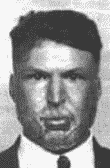
Adamo, Vito (1883-1913)

Born Sicily, Aug. 18, 1883.
Killed Detroit, MI, Nov. 24, 1913.

Vito Adamo was an early Mafia leader in the Detroit business district. He and his younger brother Salvatore were killed during a war with the Giannola Gang.

The Adamo birthplace is not entirely certain, though some sources indicate it was Salemi, an inland Sicilian municipality in the western Province of Trapani. (Appropriate age Adamos named Vito and Salvatore and originating in Salemi can be found in the immigration records from the early 1900s, but those Adamos were heading to Boston rather than Detroit.) The Adamo brothers likely led a small Mafia organization in Detroit in the early 1900s, when local Italian businessmen sought their protection from Black Hand extortionists.

Vito Adamo became the champion of a "White Hand Society" formed to eradicate the Black Handers of the Giannola Gang, who were encroaching on the business district from downriver bases in Ford City and Wyandotte.

Black Hander Carlo Caleca was shot and seriously wounded in August 1913. He lived long enough to accuse Vito Adamo and Filippo Buccellato of being his assailants. He succumbed to sepsis on August 8. Adamo and Buccellato were tried for murder. They were acquitted in October 1913 after Caleca's wife and a boarder at their home testified that Caleca told them he did not recognize the men who shot him.

Early in November, Vito and Salvatore were arrested following the shooting of former city police detective Ferdinand Palma. Palma had been forced out of the police department in 1905 after being connected with a human trafficking ring. He became a banker and padrone (labor agent). The Adamos were released after convincing authorities that they had a friendly relationship with Palma. Some considered the shooting of Palma to be an attempt by the Giannola brothers to remove a helpful Adamo ally.

At about five o'clock in the afternoon of November 24, the Adamos finished up work as traveling peddlers of wine and liquor and left the business establishment of their partner Pietro Mirabile at Mullett (close to current Nicolet Place) and Rivard Streets. They walked along Mullett toward their home on Champlain Street (now East Lafayette).

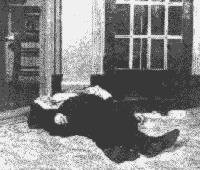
A short distance up the street, two men drew sawed-off shotguns from their coats and fired into the brothers. The gunmen fled. When police arrived, the found the Adamos in the gutter in front of 170 Mullett Street. Vito Adamo died on the way to St. Mary's Hospital. Salvatore died at the hospital a half hour later. Both were buried November 27 at Mount Olivet Cemetery.


See also:

Sources:

  • Carlo Calego Death Certificate, State of Michigan Department of State Division of Vital Statistics, no. 6327, Aug. 8, 1913.
  • Michigan Death Records, Nov. 24, 1913, Ancestry.com.
  • Salvatore Adamo Death Certificate, State of Michigan Department of State Division of Vital Statistics, no. 9030, Nov. 24, 1913.
  • Vito Adamo Death Certificate, State of Michigan Department of State Division of Vital Statistics, no. 9029, Nov. 24, 1913.
  • "Dying statement may convict two," Detroit Free Press, Oct. 10, 1913, p. 8.
  • "Ten killed, six wounded; Black Hand record in Detroit in eleven months," Detroit Free Press, Nov. 25, 1913, p. 1.
  • "Two exonerated in murder case," Detroit Free Press, Oct. 14, 1913, p. 5.
  • "Two Italians, brothers, are fiend victims," Port Huron MI Times-Herald, Nov. 25, 1913, p. 6.
  • "Two more marked for death in blood-feud of Detroit Sicilians," Detroit Free Press, Nov. 26, 1913, p. 1.
  • "Two more slain in Detroit streets in bitter Italian feud," Lansing MI State Journal, Nov. 25, 1913, p. 14.
  • "Two Sicilians slain in Italian colony of Detroit; feud result," Detroit Free Press, Nov. 25, 1913, p. 1.
  • "Widow's oath is blamed for bomb deaths," Detroit Free Press, April 13, 1914, p. 1.
  • Rice, Dennis, "Vito Adamo," Find A Grave, findagrave.com, Memorial no. 7319067, March 31, 2003, accessed Nov. 19, 2018.

Petto, Tomasso (1879-1905)

Born Province of Palermo, Sicily, c1879.
Killed Browntown, Pittston, PA, Oct. 21, 1905.

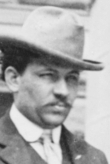
Tomasso Petto, also known as Luciano Perrino (also written about as Luciano Parrino and Tom Carrillo), was a brutal enforcer for the early Morello Mafia in New York City. He participated in counterfeiting operations and "Black Hand" extortion schemes. After establishing himself as a Black Hand leader in northeastern Pennsylvania in 1905, he was murdered in an apparent gangland "hit."

Petto acquired the nickname "Il Bove," meaning "The Ox," because of his physique. He stood about five-feet-eight-inches tall and weighed approximately 220 pounds, nearly all of it muscle. His shoulders, arms, legs and neck were massive. Once, when he was being placed under arrest, he put his arms around the body of a detective - said to be the most powerfully built man on the New York police force - and nearly squeezed the life out of the man.

Petto became the prime suspect in the Barrel Murder case of April 1903, when police found him in possession of a pawn ticket for a watch owned by the victim, Benedetto Madonia. The murder was closely linked with the counterfeiting operations of Mafia boss of bosses Giuseppe Morello - a disciplinary action against Madonia's imprisoned brother-in-law Giuseppe DiPrimo, who was believed (wrongly) to have cooperated with the authorities. Though Petto was indicted for the murder, he never stood trial. State witnesses hesitated to testify against him, evidence linking him to the murder was lacking and there was official confusion over his identity - some mixed him up with Morello mobster Giovanni Pecoraro. After months locked in the Tombs prison awaiting trial, Petto was discharged on Jan. 29, 1904.

He returned to his old haunts on Mulberry Street and Mott Street and celebrated his release with friends. U.S. Secret Service operatives kept an eye on him, as he remained a counterfeiting suspect. During the evening of Jan. 29, he reportedly received a telephone call at a Mott Street restaurant. After the call, he apologized to his friends and quickly left the city. Secret Service agents tracked him to Port Chester, New York. He did not remain in Port Chester for long.

In the spring of 1905, Petto reportedly ran into some trouble with the Secret Service, as he had been involved in the sale of unlicensed cigars in West Virginia. He and his young family had just settled into a new residence in Old Forge, Pennsylvania (between Scranton and Pittston), when he was arrested for the offense and made to pay a heavy fine.

Petto, his wife and two young children relocated to Browntown, just south of Pittston, in the summer of 1905. There, under the name of Luciano Perrino, he quickly established himself as leader of a band of Black Hand terrorists. As fronts for his underworld activities, he opened a grocery and a butcher shop along South Main Street in the downtown area, a short distance from the Susquehanna River.

At about the time of his arrival, a Browntown resident named Frank Culloro was murdered. Culloro's body was found along Cork Lane near an old mine shaft. His head was found later at the bottom of the shaft. Some in the area believed the newcomer was responsible.

On the evening of Saturday, Oct. 21, 1905, Petto remained at his butcher business until quite late and then began the long walk across town to his home on Lincoln Street. At about 10:30, just a few paces from his front door, he was alerted to some danger and pulled out the .38-caliber revolver he carried with him. He would not have the opportunity to use the weapon. At that moment, he was struck in the right side by a blast of small-caliber shot fired at close range. The pellets embedded into his right arm, right side and right hip. At almost the same moment, additional shots were fired, and larger caliber slugs pierced Petto's body.

A large chunk of lead tore into the right side of his chest and proceeded downward, severing the spinal column and leaving the body below the spleen, leaving a gaping exit wound. Another projectile, more than a half inch in diameter and with jagged edges, struck Petto between his eighth and ninth ribs and lodged in his liver. A third slug smashed Petto's handgun and ripped apart his hand. A fourth cracked into his right elbow and smashed the bones almost to dust.

Neighbors initially thought little of the autumn evening explosions, as hunting was common in the area. But the blasts brought Petto's wife out of the house. She found her husband dead on the ground. She saw little if anything of the gunmen who took his life. At a coroner's inquest the next week, she testified that she recalled seeing one man dressed in white in the area.

Following the inquest, the coroner's jury decided that Petto was killed by person or persons unknown. No clues were ever found to the identities of Petto's killers, but many were sure they knew who was responsible. Newspapers and law enforcement officers speculated that Giuseppe DiPrimo, recently released from Sing Sing Prison, had avenged himself on the murderer of his brother-in-law Madonia. It was a good story, but Petto reportedly had many enemies other than DiPrimo. William Flynn of the U.S. Secret Service stated that DiPrimo could have had nothing to do with the Petto killing, as he was not yet out of prison at the time it occurred. (The timing of DiPrimo's release is uncertain as of this writing. He was sentenced to four years and could have been paroled in plenty of time to track down and kill Petto. If not paroled, his sentence with good time allowance would have expired too late.)

Petto was buried in the Market Street Cemetery, also known as St. John the Evangelist Cemetery, in Pittston. After the household contents were sold off, his wife took the children to New York City and moved in with her parents there.

See also:


Sources:

  •  "Came from Buffalo,” Fitchburg (MA) Sentinel, Apr. 21, 1903, p. 7.
  •  "Mafia murder gang are all in police net," New York Evening World, April 25, 1903, p. 1.
  •  "No pistols for Mafia," New York Evening World, April 29, 1903, p. 2.
  •  "Have complete chain of evidence," New York Tribune, April 30, 1903, p. 6.
  •  "Six held in Mafia case," New York Evening World, May 8, 1903, p. 1.
  •  "'The Ox' goes free in barrel murder," New York Evening World, Jan. 29, 1904, p. 2.
  •  "'The Ox' may yet be put on trial," New York Evening World, Feb. 3, 1904, p. 5.
  •  "Black Hand leader killed," Scranton PA Republican, Oct. 23, 1905, p. 4.
  •  "Mysterious murder in village of Browntown," Pittston PA Gazette, Oct. 23, 1905, p. 1.
  •  "No clue discovered," Wilkes-Barre PA Record, Oct. 24, 1905, p. 5.
  •  "Perino murder still unsolved," Scranton PA Truth, Oct. 24, 1905, p. 1.
  •  "No clue whatever yet," Pittston PA Gazette, Oct. 24, 1905, p. 1.
  •  "Petto, the Ox, murder victim," New York Sun, Oct. 24, 1905, p. 5.
  •  "May have good clue," Pittston PA Gazette, Oct. 25, 1905, p. 1.
  •  "Revenge on Black Hand," Washington Post, Oct. 26, 1905, p. 1.
  •  "The murder mystery," Pittston PA Gazette, Oct. 27, 1905, p. 1.
  •  "Parrino inquest," Wilkes-Barre PA Record, Oct. 28, 1905, p. 5.
  •  "Reign of crime near Pittston," Wilkes-Barre PA Times Leader, Dec. 20, 1905, p. 26.
  •  Carey, Arthur A., with Howard McLellan, Memoirs of a Murder Man, Garden City NY: Doubelday, Doran and Company, 1930, p. 121.
  •  Flynn, William J., Daily Report, April 20, 29, 30 1903, Department of the Treasury, United States Secret Service Daily Reports, R.G. No. 87, Roll 109, Vol. 9, National Archives.
  •  Flynn, William J., The Barrel Mystery, New York: James A. McCann Company, 1919, p. 13-14, 16-17, 22.
  •  Petacco, Arrigo, translated by Charles Lam Markham, Joe Petrosino, New York: Macmillan Publishing Co., 1974, p. 9, 14.

Gallucci, Giosue (1864-1915)

Born Naples, Italy, Dec. 10, 1864.

Killed New York, NY, May 21, 1915.


Gallucci reigned as the king of the Italian Harlem rackets from the turn of the Twentieth Century to his assassination in 1915.

Gallucci arrived in the United States about 1891. By 1898, American authorities already were complaining about his criminal activity and seeking to have him deported. They noted that he and his brothers, Genaro, Vincenzo and Francesco, had criminal records in Italy before they crossed the Atlantic. Giosue Gallucci's record in his native country included arrests for theft and blackmail.

With great influence over his fellow Italians in East Harlem, Gallucci established strong political and business connections. He employed Neapolitan and Sicilian street gangs as his enforcers and established successful local criminal enterprises, as well as legitimate businesses, including a coffeehouse, a bakery and a cigar factory.

Gallucci's base of operations was a building at 318 East 109th Street, which housed his living quarters in addition to his coffeehouse and bakery.

The more lucrative of Gallucci's underworld rackets included an Italian lottery and a protection fee his men extorted from sellers of produce.

Gallucci's brother Vincenzo was murdered Nov. 20, 1898, reportedly on orders from an Italian "secret society similar to the Mafia" (likely the Neapolitan Camorra). Two gunmen laid in wait for him at the corner of Canal and Mulberry Streets in Manhattan and shot him as he arrived there. Francesco D'Angelo and Luigi LaRosa were accused of the killing. They pleaded guilty to manslaughter and were given prison sentences of 20 years and 15 years, respectively.

Genaro Gallucci's activities as a collector of protection payments caught the attention of authorities, and he fled New York City for a time. When he returned in the late summer of 1909, New York Police captured him and immigration officials began efforts to deport him to Italy. On Nov. 14, 1909, Genaro Gallucci was shot to death while inside his brother's East 109th Street business.

Though Giosue Gallucci was called the "king" of the East Harlem rackets, he was also victimized by Black Hand extortionists. He was especially harassed by Neapolitan gang leader Aniello "Zopo the Gimp" Prisco, who was believed responsible for killing Genaro Gallucci.

To resolve matters, Gallucci set up a meeting with Prisco on the evening of Dec. 16, 1912. Prisco probably did not expect an ambush as the meeting was planned for a barbershop run by his allies, the DelGaudio brothers. But Gallucci took suddenly ill and could not leave the back room of his East 109th Street bake shop. He sent a messenger to find Prisco and bring him to the shop.

When "Zopo" arrived, he was promptly shot in the head by Gallucci bodyguard John Russomano. The king told the police the killing was in self-defense. He asserted that Prisco had come to rob him of $100. Russomano, he said, drew a pistol. Prisco turned to fire at Russomano, and Russomano got off the first shot. The police accepted the explanation - not surprising, considering Gallucci's political clout - but Russomano and Gallucci were marked for death by the survivors in Prisco's gang.

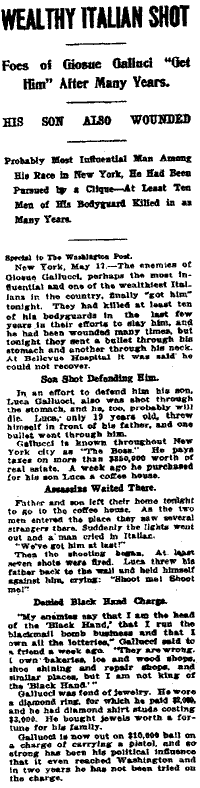
Gallucci's prestige began to wither in 1913, as a gang war with Prisco's old outfit stretched on, and he was scrambling to maintain control of the underworld in 1914 and 1915. Rival lotteries were springing up right under his nose. Gallucci and his son Lucca were gunned down at Lucca's coffeehouse business, 336 East 109th Street, on May 17, 1915.

The two victims were brought to Bellevue Hospital. Lucca died there the next day. Gallucci lingered until May 21 before succumbing to his injuries. His death left open the coveted position of East Harlem underworld/political boss and triggered gangland feuding. (Gallucci's story is similar to that of Chicago's "Big Jim" Colosimo, a criminal and political leader who was victimized by extortionists and apparently murdered by men he previously commanded.)

Related Links:

DiGiovanni, Joseph (1888-1971)

Born Chiusa Sclafani, Sicily, April 23, 1888.

Died Kansas City, Aug. 5, 1971.


"Joe Church" DiGiovanni is among the earliest known Mafia bosses of Kansas City, MO. His family roots extend back to Chiusa Sclafani in Sicily. He entered the United States in 1903.

Once settled in Kansas City, Joseph and his brothers Paul and Pietro/Peter (known as "Sugarhouse Pete") reportedly engaged in Black Hand extortion and kidnapping within the local Italian communities. Paul DiGiovanni appears to have served as boss of the operation in its early stages and into the Prohibition Era (Paul died in 1929). According to legend, an attempt to firebomb a building in order to collect on its insurance resulted in an unexpected explosion that left Joseph permanently scarred on his face and hands.

Black market opportunities presented themselves during the First World War, and the DiGiovannis - who ran a wholesale grocery - took full advantage. Joseph DiGiovanni became partners with James Balestrere in a Prohibition Era bootlegging operation.

The U.S. Senate's Kefauver Committee interviewed the sixty-two-year-old DiGiovanni in the summer of 1950. At that time, he and his brother Peter ran a wholesale liquor distributorship affiliated with the Seagram's company. DiGiovanni denied any knowledge of the Mafia. He denied ever even hearing of the word "Mafia." He insisted that he had never been arrested or questioned by police.

Peter DiGiovanni, then sixty-four (born June 28, 1886), also appeared before the Kefauver Committee. He acknowledged being arrested repeatedly for bootlegging during the Prohibition Era. He said he was never convicted.

The Kefauver Committee concluded that Joseph DiGiovanni and James Balestrere still served as the top men in the Kansas City underworld.

Related Links:

Colosimo, Vincenzo "Jim" (1878-1920)

Born Colosimi, Calabria, Italy, Feb. 16, 1878.

Killed Chicago, IL, May 11, 1920.


"Big Jim" Colosimo was a vice racketeer and political power broker in Chicago just after the turn of the 20th Century. His primary illicit business enterprises appear to have been gambling rackets and the management of a string of social clubs and brothels.

Colosimo was repeatedly victimized by Black Hand extortion and, for reasons largely unknown, sent to New York for aid. He called for Johnny Torrio, who partnered in a Brooklyn-Manhattan gang leadership with Frankie Yale, to move west. Torrio settled in Chicago around 1909 and immediately put an end to Colosimo's Black Hand troubles.

In 1919, Five Points Gang enforcer Al Capone, who was wanted on murder charges in New York, decided to follow in Torrio's footsteps and joined Colosimo's Chicago organization.

With the arrival of Prohibition, Torrio and Capone wished to expand their illicit enterprises into bootlegging. Colosimo, perhaps fearing to compete with established underworld gangs in the import of alcohol, reportedly refused.

Colosimo was assassinated May 11, 1920. It is widely believed the hit was performed by Yale at the request of Torrio and/or Capone.

The Colosimo-Torrio-Capone group was not a Mafia organization, and, in fact, was presenting growing problems for the true Mafiosi in town - the Gennas and later the Aiellos. The Gennas might have been partly responsible for Colosimo's death. Colosimo also went through an ugly divorce just before his death, and his former brother-in-law was apparently suspected by police.

Whoever the responsible parties were, Torrio and Capone were the main beneficiaries. They took over Colosimo's businesses and formed a full-fledged gang.

Related Links:

Oldfield, Frank (1867-1916) - Postal Inspection

Born Ellicott City, Maryland, Jan. 1867.

Died Athens, Ohio, May 25, 1916.


John Frank Oldfield, who went by the name of "Frank," and his younger brother Clarence for a time held local government jobs in their native Howard County, Maryland. They were key men in the Republican Party of Ellicott City (at a time when political rallies often were indistinguishable from street gang clashes). Into the late-1890s, Frank Oldfield served as the sheriff of Howard County.

During the Administration of President William McKinley, Frank Oldfield joined the United States Postal Inspection Service, while Clarence Oldfield became an inspector for the Customs Service. Continued political activity momentarily cost Frank Oldfield his job in the fall of 1899. After his return to the Postal Inspection Service, Frank Oldfield became the most renowned member of what was at the time the highest ranking federal law enforcement agency.

Oldfield worked primarily in the Midwest, but he also had occasion to travel. His authority as a postal inspector gave him law enforcement powers throughout the U.S.

In the early 1900s, he assisted in the conviction of a former congressman for taking bribes related to the purchase of postage stamp dispensing machines. Oldfield also cracked down on several Ohio postmasters he found were taking money from the till and some postal patrons who were using the mails for gambling and pornography.

Oldfield mobilized local government agencies against a growing ring of Mafia black handers in Ohio known as the Society of the Banana. While many of the underworld group's illegal activities were not mail-related, the Society's practice of extorting money through mailed threats brought the case to Oldfield's desk. He succeeded in breaking up the ring, led by Salvatore Arrigo, Francesco Spadera and Salvatore Lima, by 1909.

During his investigation of the Society, Oldfield tracked down branches in Indiana, Illinois, New York, California and Oregon, and established links between the Arrigo-Spadera mob and the alleged assassins of both New Orleans' Police Chief David C. Hennessy and New York Detective Joseph Petrosino. In the summer of 1909, Oldfield arrested Charles Vicario at Bellefountaine, Ohio, charging him with being a fugitive and with having knowledge of the Petrosino assassin.

Oldfield and his family settled in the community of Athens, Ohio, about 75 miles southeast of Columbus. Oldfield spent his final years battling cancer. He died in Athens on May 25, 1916. A small news item in the newspaper of nearby Lancaster, Ohio, stated, "J.F. Oldfield, former postal inspector and famous as one of the shrewdest detectives in the federal service, died at his home here following a long illness from cancer. Oldfield gained national fame in the Black Hand cases in northern Ohio."