Born Brooklyn, NY, Jan. 17, 1899.
Died Palm Island, FL, Jan. 25, 1947.
Capone was a brutal Neapolitan mobster who became a powerful force in the American Mafia. Though he served as one of the architects of the nationwide criminal Syndicate, Capone never earned full acceptance by his Sicilian associates. Control of the underworld of his adopted Chicago eluded him until very near the end of his racket career.
Capone grew up in the Five Points Gang. He was a fearsome enforcer for Five Points leader Johnny Torrio. When Torrio later established himself in Jim Colosimo's Chicago vice rackets, Torrio and Frank Yale of Brooklyn arranged for Capone to make the move west in 1919.
Capone quickly rose to the top of the Colosimo-Torrio crime empire, which thanks to Torrio and Capone, included bootleg liquor among its enterprises. Torrio narrowly escaped death on Jan. 24, 1925, and retired, leaving the gang to Capone.
Al Capone's desire to control all of Chicago, including the local branch of the exclusively Sicilian Unione Siciliane, and his utter brutality ensured that the city's underworld was in a near constant state of warfare from 1925 to 1930. His tinkering with the Unione offended old-line Sicilian Mafiosi. Old friends Capone and Yale - both vassals of Mafia boss of bosses Giuseppe "Joe the Boss" Masseria - had a falling out. Legend says it was over the hijacking of liquor shipments.
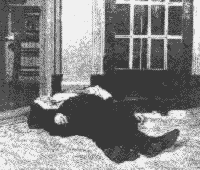
When Yale was murdered in 1928, Capone initially was not suspected. But weapons used at the scene reportedly were linked to Chicago gangland murders, including the infamous St. Valentine's Day Massacre.
Capone is generally believed to have been responsible for the that Massacre of non-Italian North Side gangsters in February 1929 and a horrific triple-murder in May of that year which put an end to a rebellious Sicilian conspiracy within his organization.
The bloodletting drew the attention of East Coast Mafiosi. A mid-May conference of Chicago gang leaders was held in Atlantic City to iron out differences. Beyond Capone and his right-hand man Frankie Rio, attendees at the convention are unknown. It appears likely that the bosses of East Coast criminal organizations were present.
Following the Atlantic City meeting, Capone was arrested in Philadelphia on a weapons charge. Some believe he orchestrated the arrest. He remained in prison for most of a year.
When he emerged from prison, Capone found the nation's Mafia groups preparing for war and he backed his old boss Masseria. As his part in the Castellammarese War, Capone sent regular financial contributions to Masseria and eliminated Castellammarese ally Joe Aiello in September of 1930.
Capone saw his New York ally destroyed by Charlie Luciano's treachery in April of 1931. But the Chicago gang leader hosted the crowning of opposing Mafia general Salvatore Maranzano as the new boss of bosses in order to heal the old wounds.
Luciano then disposed of Maranzano in September 1931. Capone quickly arranged another underworld convention. Luciano refused the boss of bosses title. A new Commission of powerful Mafia leaders was installed to mediate differences between crime families.
Capone had only about a month to enjoy the new underworld order. His trial for tax evasion began in October. On Nov. 24, 1931, he was sentenced to 11 years in prison, in addition to more than a quarter million dollars in taxes, interest and fines. In jail, an existing case of syphilis reportedly began to eat away at his mind and body. He served about seven and a half years of his sentence.
He emerged from prison on Nov. 16, 1939, virtually incapacitated and was never again involved in underworld affairs. He retired to Palm Island, Florida, and died on Jan. 25, 1947. The causes of death were listed as stroke and pneumonia.
Related Links: